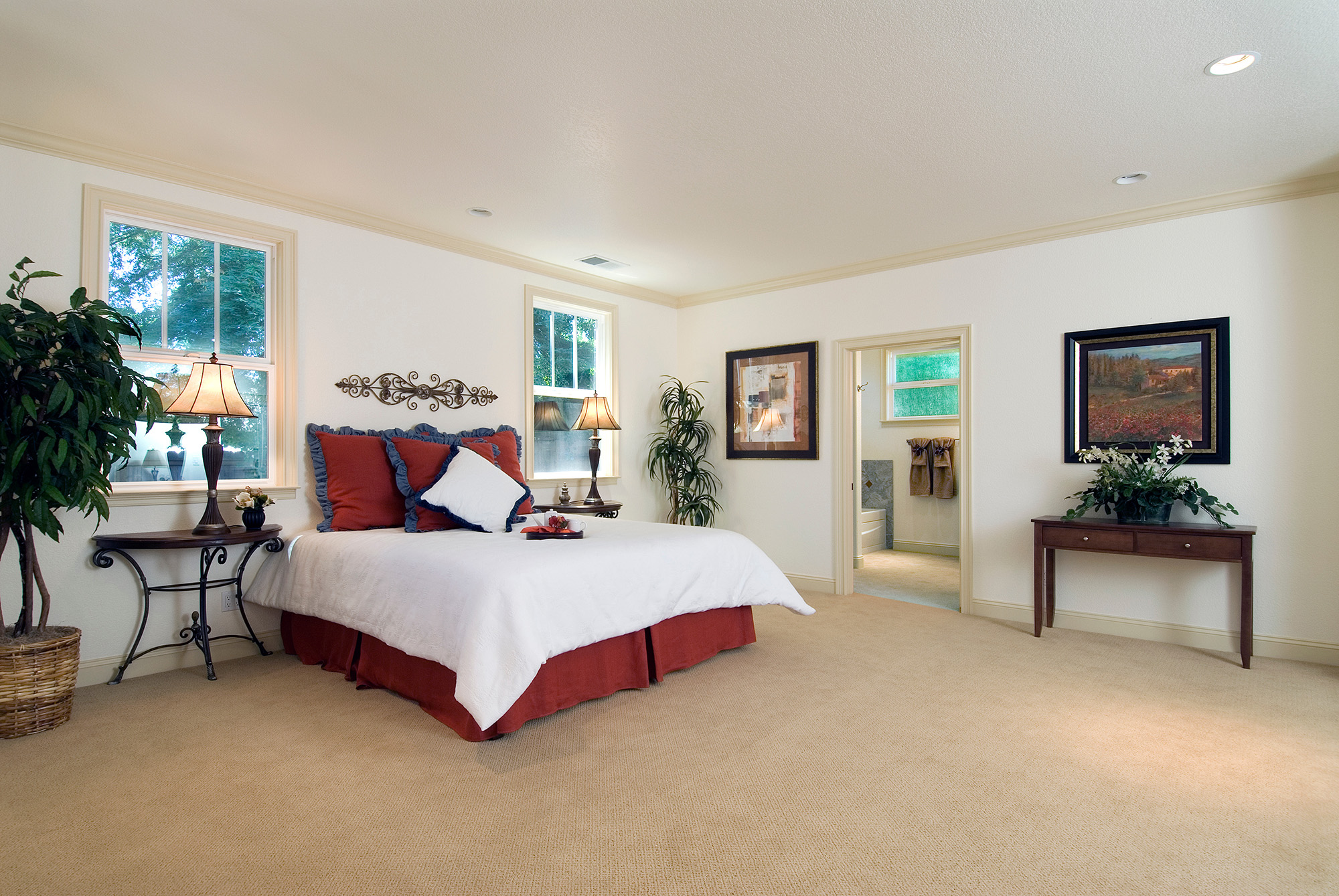
Make Comfort a Priority in the Rooms Where You Unwind
Some rooms are designed around activity, while others are meant to help people slow down. Bedrooms, reading corners, family rooms, and upstairs lounges are places where comfort can matter as much as appearance. Flooring plays an important role in how these spaces feel, particularly when the goal is to create a softer, quieter environment.
Carpet remains a compelling option for these rooms because it introduces texture, provides a cushioned surface underfoot, and can help absorb some sound within the space. It also offers a broad range of colors and patterns, allowing homeowners to create anything from a calm neutral bedroom to a more expressive family room.
For homeowners in Lynnwood, Washington, carpet selection should balance these comfort benefits with practical considerations such as traffic, cleaning, indoor conditions, and the way each room is used. The right carpet is not simply the softest sample in the showroom. It is the one that supports the room's purpose and fits the household's daily routine.
Understand How Carpet Changes the Feel of a Room
Hard-surface flooring can create a clean, structured appearance, while carpet introduces a different combination of softness and visual warmth. The effect comes from both the surface itself and the way it interacts with furniture, lighting, and textiles.
In a bedroom, carpet can create a comfortable surface beside the bed and help the room feel more settled. In a family room, it can soften the space around sofas and chairs. In a reading nook, a textured carpet can make a small area feel distinct without requiring additional furniture or decorative elements.
Color contributes to the experience. Warm neutrals can create a relaxed foundation, while deeper tones may give the room a more intimate appearance. A subtle pattern can add interest without overwhelming the design.
Before choosing a product, consider the mood you want the room to create. Flooring should support that purpose rather than compete with the furniture and other finishes.
Choose the Right Carpet Texture for Each Space
Carpet is available in a wide range of textures, from smooth and plush surfaces to more defined looped or patterned constructions. Each offers a different visual and tactile experience.
A plush cut-pile carpet may appeal to homeowners who want a soft, luxurious feel in a bedroom. A textured carpet can provide a more relaxed appearance and may be suitable for a family room that experiences regular activity. Loop-pile constructions offer a distinct surface character, although the specific product should be evaluated for the intended use.
The carpet's construction affects more than appearance. Pile height, density, fiber type, and backing all influence how it feels and performs. A thick-looking carpet is not automatically the most durable or appropriate option for every room.
Compare samples by walking on them, examining the texture, and reviewing the manufacturer's recommendations. The right balance of softness and practicality depends on how the room will be used.
Use Carpet to Create a More Cohesive Bedroom
A bedroom's flooring can help connect the bed, nightstands, wardrobe, curtains, and other furnishings. The color does not need to match every element, but it should relate to the overall palette.
Warm beige and taupe can work with a wide range of bedding and furniture. Soft brown tones may complement natural wood, while muted green or blue can introduce color without becoming overly dominant. A patterned carpet can add interest to a room with plain walls and simple furniture.
Think about how the carpet will look around the bed. In some layouts, a continuous carpet surface creates a unified appearance. In others, the furniture arrangement may leave only a narrow border visible, making the carpet's color and texture more important than an elaborate pattern.
Lighting should be considered as well. A carpet sample may appear lighter in a bright showroom than it does in a bedroom with limited daylight. View the material in the room whenever possible before making a final selection.
Consider Sound in Upstairs Rooms and Shared Spaces
Sound can influence how comfortable a home feels. Footsteps, moving furniture, and everyday activity may be noticeable in upstairs rooms or spaces that connect directly to other living areas.
Carpet can absorb some sound within a room and may reduce the noise associated with footsteps compared with many hard surfaces. The actual acoustic effect depends on the carpet construction, cushion, subfloor, and building assembly.
It is important to understand that carpet does not completely soundproof a room or prevent all noise from traveling between floors. If sound transmission is a major concern, the complete floor and ceiling construction should be considered.
For bedrooms above a living room, a soft carpet and suitable cushion may contribute to a quieter-feeling space. In a family room, carpet can help reduce some of the sharp reflections that occur when sound encounters hard surfaces.
These benefits can be especially valuable in households where different people work, study, relax, or sleep at different times.
Choose Colors That Feel Warm Without Making the Room Dark
The color of carpet influences both the mood and the apparent balance of a room. Light colors can create an airy impression, while darker shades may provide depth and contrast. Mid-tone neutrals can offer a balance between these effects.
Warm neutrals remain a versatile choice because they can work with many wall colors, furniture finishes, and decorative styles. However, a neutral carpet does not have to be flat or uniform. Subtle variation in texture or tone can add visual interest while preserving flexibility.
If the room already contains colorful artwork, patterned bedding, or strong furniture finishes, a simpler carpet may help maintain balance. If the room is relatively plain, a patterned or textured carpet can become a defining feature.
Take the time to compare the carpet with the elements that will remain in the room. A coordinated palette helps the finished space feel intentional rather than assembled from separate decisions.
Think About Carpet Cushion and Underfoot Comfort
The cushion beneath carpet influences how the installed floor feels. It can contribute to the softness of the surface and affects how the carpet is supported during everyday use.
The appropriate cushion depends on the carpet construction and the manufacturer's installation requirements. A very thick or soft cushion is not necessarily the best option, because the wrong combination can affect the carpet's performance and appearance.
If comfort is a priority, discuss the carpet and cushion as one system. Consider the room's traffic level, furniture, and expected use rather than judging the carpet alone.
It is also useful to ask about maintenance and replacement considerations. The complete installation should be selected for the way the room will be used over time, not just how it feels during a brief showroom visit.
Balance Comfort with Cleaning Requirements
Carpet can make a room feel welcoming, but it needs regular care. Dust, hair, and loose debris should be removed through routine vacuuming, with the frequency based on traffic and household needs.
Bedrooms may experience relatively light traffic, while family rooms and shared spaces can accumulate more debris. Homes with children or pets may require additional attention, particularly in areas where food and drinks are used.
The carpet fiber and construction influence the recommended cleaning methods. Follow the manufacturer's guidance for vacuuming, spot cleaning, and professional maintenance. Avoid using cleaning products that are not approved for the specific carpet.
If the room is likely to experience frequent spills, consider a product whose cleaning and stain-resistance characteristics suit those conditions. No carpet is completely maintenance-free, so the care routine should be realistic for the household.
Use Carpet to Define a Reading Nook or Quiet Corner
A quiet corner does not always require a separate room. A chair beside a window, a small home library, or a compact relaxation area can feel more intentional when the flooring helps distinguish it from the surrounding space.
Carpet can contribute to that sense of separation through texture, color, or pattern. If the nook is part of a larger hard-surface room, an appropriately sized area rug may offer a similar effect without replacing the existing floor. If the area is being renovated, carpet may be considered as part of a broader plan.
The design should remain connected to the rest of the home. A color that relates to the nearby flooring, curtains, or furniture can establish a distinct zone without making it feel disconnected.
Think about how the area will be used. A reading nook may benefit from a soft surface and comfortable chair, while a study corner may require attention to desk placement and chair movement.
Coordinate Carpet with Hardwood in Adjacent Rooms
A home does not need to use the same flooring everywhere. Carpet and hardwood can complement each other when their colors and transitions are planned carefully.
Hardwood can establish a natural, structured foundation in living areas or dining rooms, while carpet may provide additional softness in bedrooms and selected family spaces. The materials can share related undertones without needing to match exactly.
For example, warm hardwood may pair well with a taupe or beige carpet. A lighter wood floor can work with a carpet that introduces gentle contrast, while darker hardwood may benefit from a lighter soft surface nearby.
Transitions should be planned around floor heights, doorways, and the layout of the rooms. The relationship between materials should look intentional, and the installation must follow the requirements of each product.
Explore the
hardwood flooring options at NW Floor Coverings if you are considering a combination of wood and carpet across different areas of the home.
Consider Indoor Conditions Before Installation
Carpet installation depends on the condition of the subfloor and the indoor environment. Before work begins, the surface should be assessed for suitability, cleanliness, and moisture conditions. Any existing moisture problem should be addressed before new carpet is installed.
The carpet, cushion, and installation method should follow the manufacturer's requirements. Some products have specific recommendations for temperature, humidity, or other environmental conditions during installation.
In the Pacific Northwest, paying attention to indoor moisture conditions is particularly important for projects involving ground-level rooms or areas with a history of water intrusion. Carpet should not be used to conceal unresolved dampness or damage.
If you are replacing existing carpet, ask whether the subfloor needs repair or preparation. Addressing these issues early helps create a more suitable foundation for the new floor.
Choose Comfort That Fits Your Lifestyle
Carpet can help make bedrooms, family rooms, and quiet spaces feel warmer, softer, and more comfortable. Its colors and textures offer considerable design flexibility, while its sound-absorbing qualities may contribute to a more pleasant indoor environment.
The best choice depends on the room's purpose, traffic level, desired feel, cleaning requirements, and relationship to the rest of the home. Comparing samples, understanding the cushion, and reviewing maintenance instructions can help you choose a product that works beyond the showroom.
Explore the
carpet selection at NW Floor Coverings to compare styles and textures for your home. To discuss your flooring plans and the options that may suit your rooms, visit the
contact page.
Whether you are updating a bedroom, creating a quieter family room, or adding comfort to a dedicated reading space, the right carpet can help make the room feel more inviting while supporting the way you live every day.